
TPC PROYECT
A scientific framework for understanding how complex systems preserve organization under uncertainty and entropy.
TPC (Theory of Persistent Coherence)
1. What is TPC?
The Theory of Persistent Coherence (TPC) is a scientific framework developed within Project Horizon to investigate how complex systems preserve organizational coherence while undergoing continuous adaptation and transformation. It proposes that coherence is not merely a consequence of organization but a measurable property that reflects the internal state of a system across multiple scales.
TPC was developed in response to a fundamental limitation of conventional approaches to complex systems, which often describe change only after it has become externally observable. The theory introduces a new perspective in which persistent coherence acts as an observable signature of ongoing organizational processes, allowing transformation to be studied before its visible manifestation.
The central objective of TPC is to determine whether multiscale coherence contains predictive information about organizational stability, structural reorganization, and critical transitions. Through theoretical development, observational instrumentation, and experimental validation, TPC seeks to establish a falsifiable scientific framework for understanding transformation in complex adaptive systems.
2.The Central Scientific Question
Can organizational transformation be anticipated through the observation of persistent multiscale coherence?
This question lies at the heart of the Theory of Persistent Coherence. Rather than asking how complex systems change after transformation has occurred, TPC investigates whether measurable patterns of organizational coherence emerge before those changes become externally visible. The theory proposes that transformation is preceded by an internal process of structural reorganization that can be observed, quantified, and scientifically tested.
Answering this question requires the integration of theoretical modeling, observational instrumentation, and experimental validation. TPC therefore treats persistent coherence not as a descriptive concept, but as a falsifiable scientific hypothesis whose predictions can be evaluated through reproducible observations across multiple domains of complex adaptive systems.
"Transformation is not an event; it is the visible consequence of an underlying organizational process." — Theory of Persistent Coherence
3.Scientific Principles
The Theory of Persistent Coherence is built upon five fundamental scientific principles that describe how organization emerges, persists, and transforms in complex adaptive systems.
Persistent Coherence
Organizational coherence is a measurable property that can persist across multiple temporal and structural scales, even under conditions of uncertainty and entropy.
Organizational Memory
Complex systems retain traces of previous organizational states. This distributed memory influences future dynamics and constrains possible pathways of transformation.
Multiscale Coordination
Local interactions become globally meaningful through coordination across multiple organizational scales. Persistent coherence emerges from these multilevel relationships rather than from isolated components.
Structural Persistence
Complex systems tend to preserve their organizational identity while continuously adapting to internal and external perturbations. Stability arises from dynamic persistence rather than static equilibrium.
Adaptive Reorganization
Transformation is viewed as a continuous process of internal reorganization. Observable structural changes are considered the final manifestation of deeper organizational dynamics.
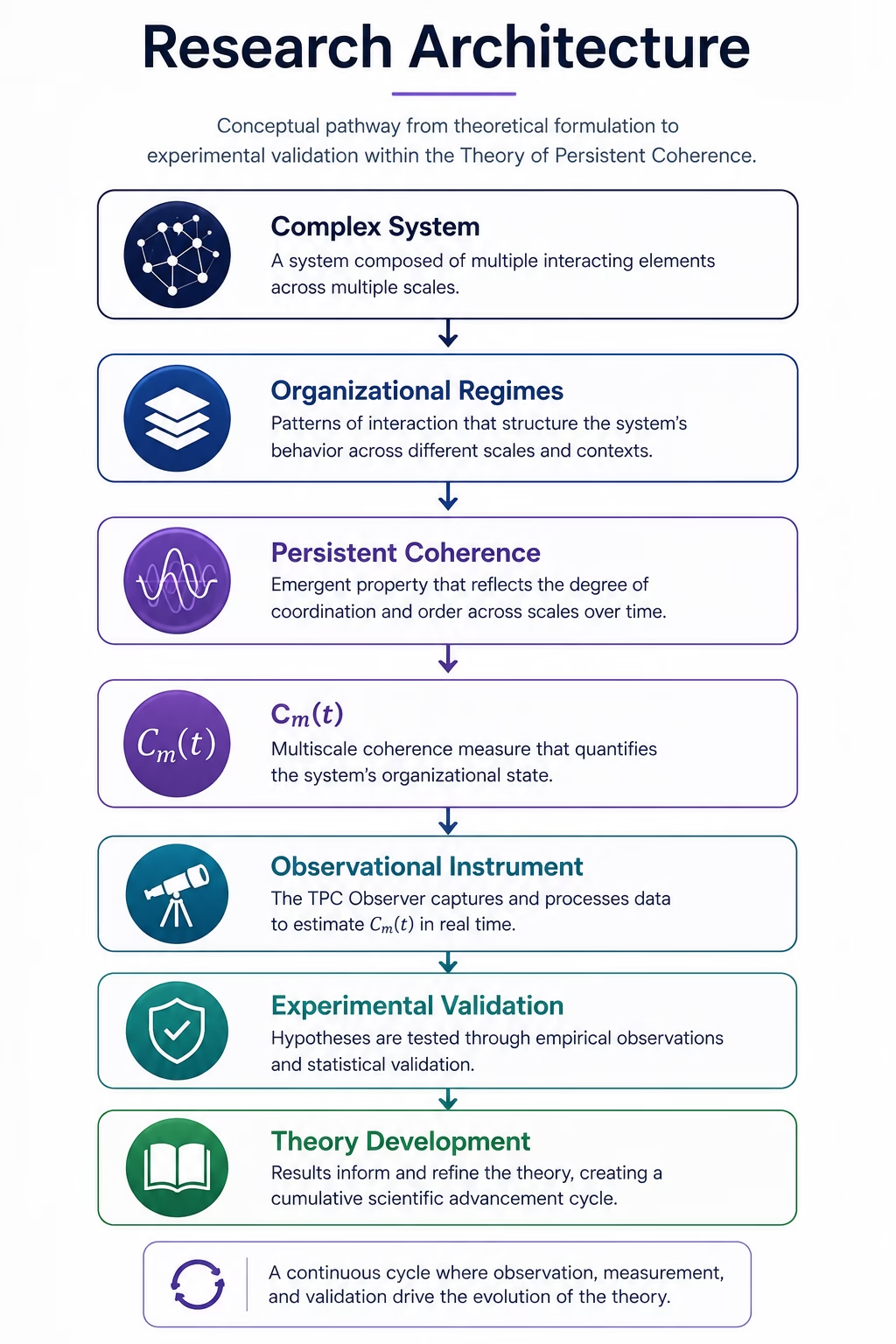
4.Research Architecture
The Theory of Persistent Coherence is developed through a continuous scientific process that integrates theoretical formulation, observational measurement, and experimental validation. Rather than describing isolated phenomena, TPC establishes a research pathway in which theoretical concepts are progressively transformed into measurable observables and empirically testable hypotheses.
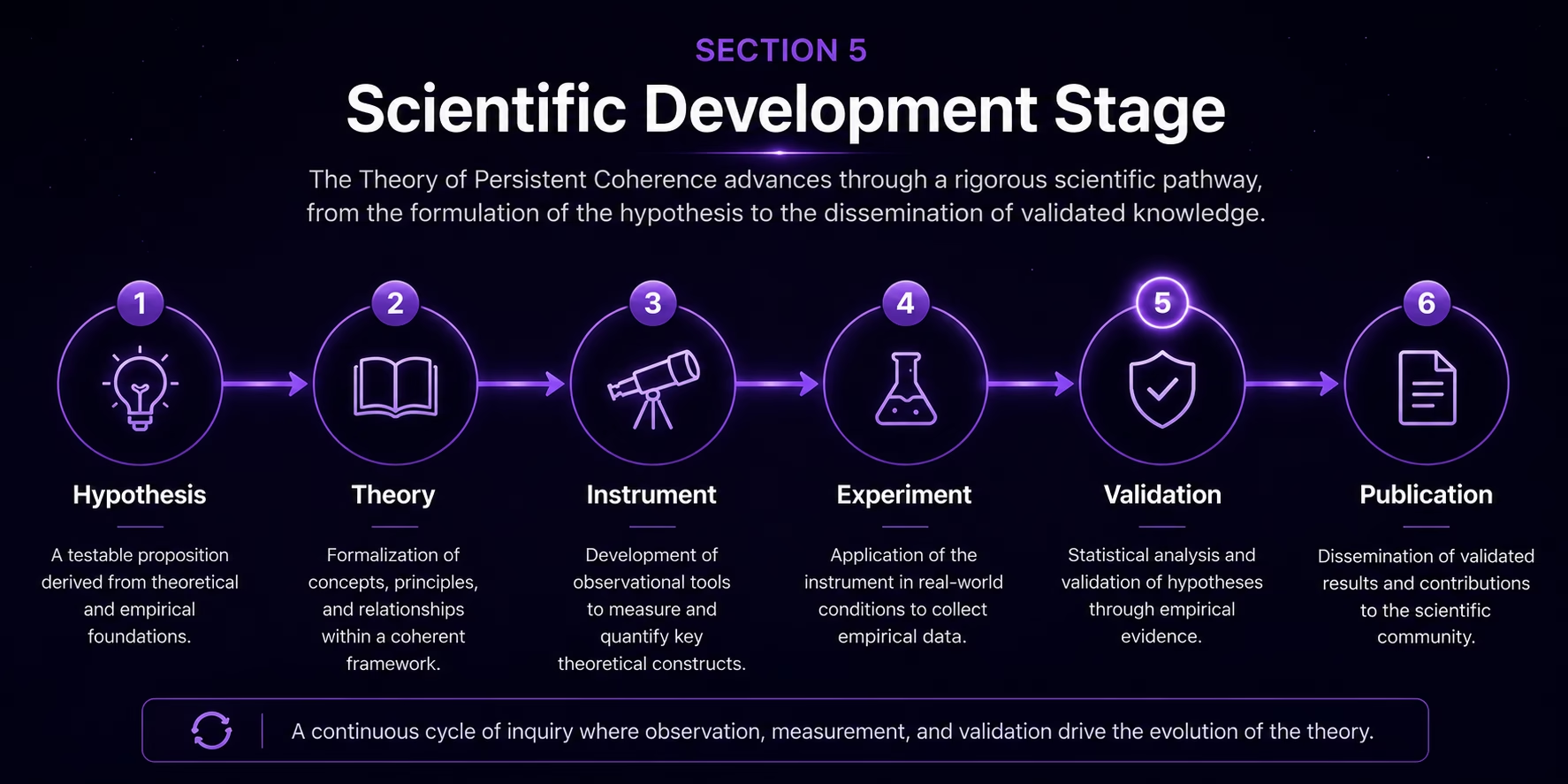
5.Scientific Development Stage
Scientific theories evolve through a rigorous and iterative process of formulation, observation, experimentation, and validation. The Theory of Persistent Coherence follows this same scientific pathway, progressing from an initial hypothesis to a continuously refined framework supported by empirical evidence.
The highlighted stage indicates the current level of scientific development of the TPC research program.
6.Research Papers
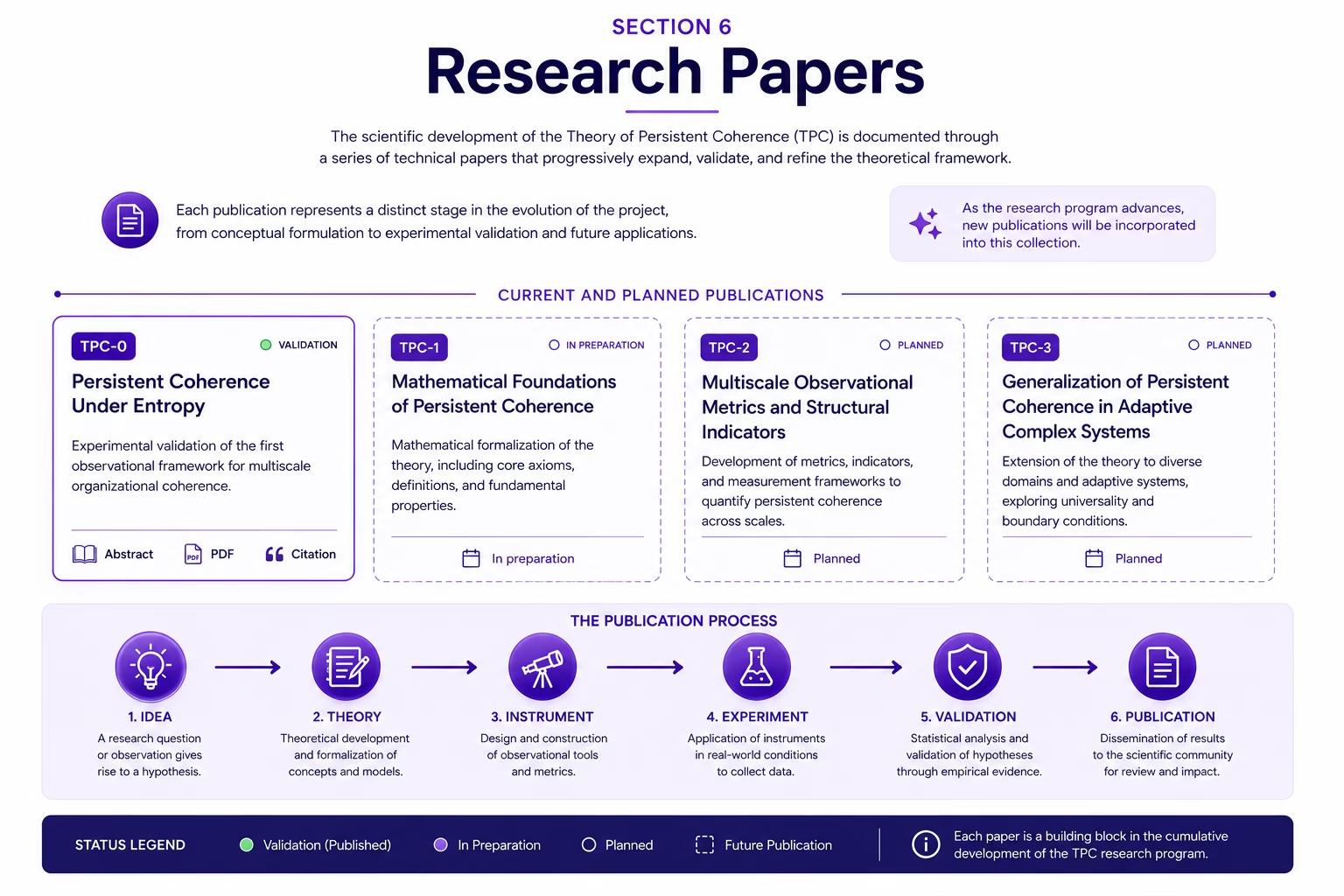
The scientific development of the Theory of Persistent Coherence (TPC) is documented through a series of technical papers that progressively expand, validate, and refine the theoretical framework.
Each publication represents a distinct stage in the evolution of the project, from conceptual formulation and mathematical development to observational instruments, experimental validation, and future applications.
As the research program advances, new publications will be incorporated into this collection.
Current Publications
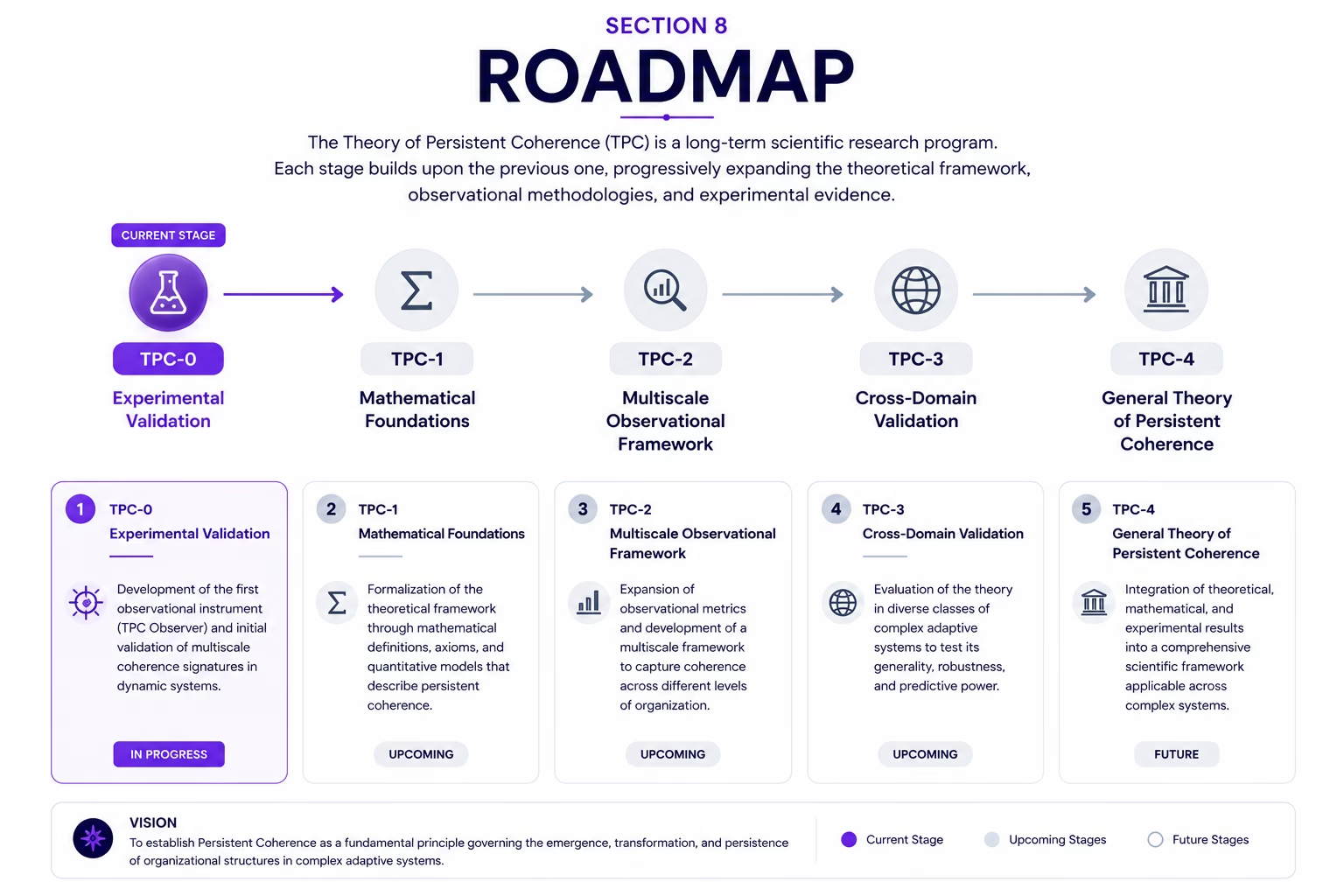
TPC-0
Persistent Coherence Under Entropy
Experimental validation of the first observational framework for multiscale organizational coherence.
Status: Validation
TPC-1 (Planned)
Mathematical formalization of Persistent Coherence.
Status: In preparation
TPC-2 (Planned)
Development of multiscale observational metrics and structural indicators.
Status: Planned
TPC-3 (Planned)
Generalization of Persistent Coherence across adaptive complex systems.
Status: Planned
TPC PROYECT
PAPERS TPC
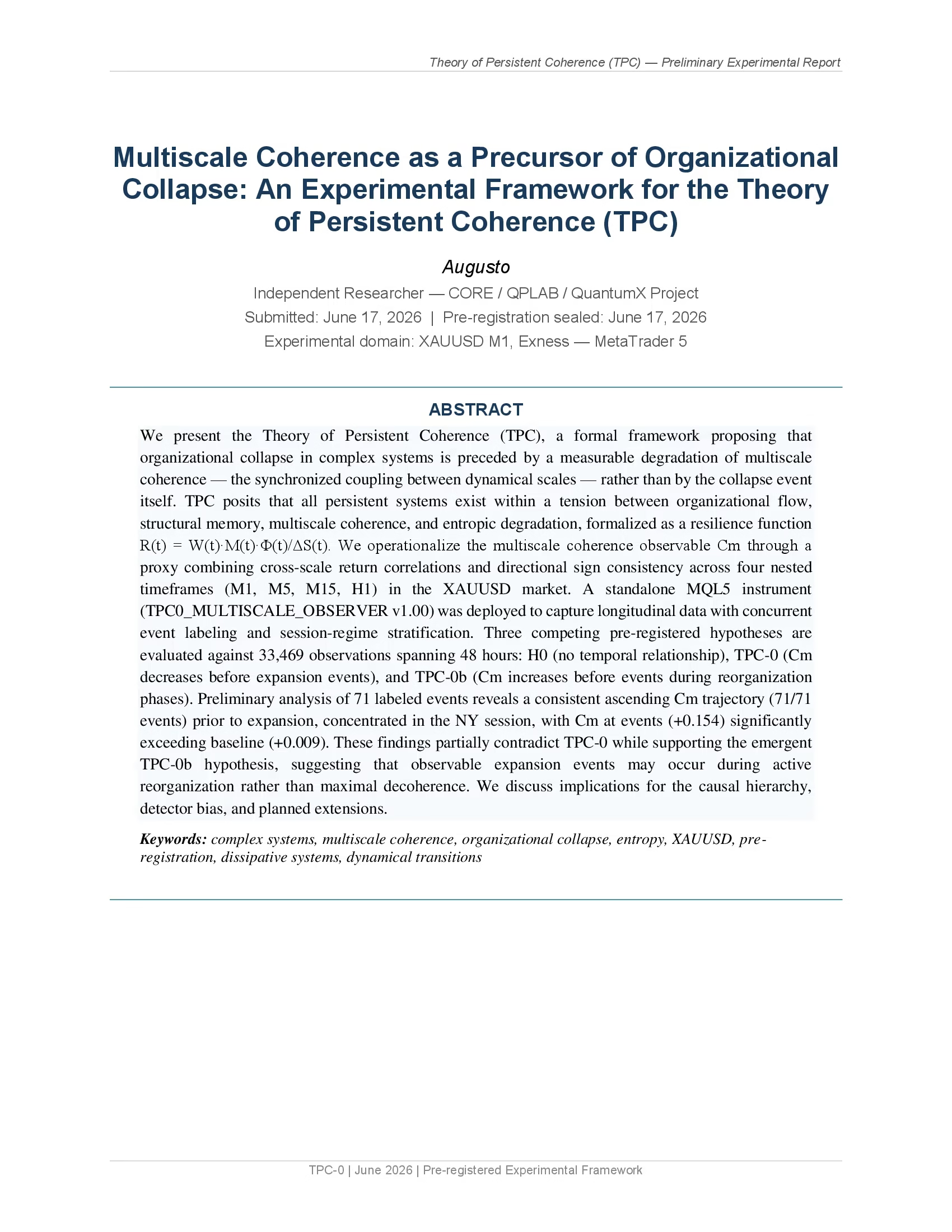
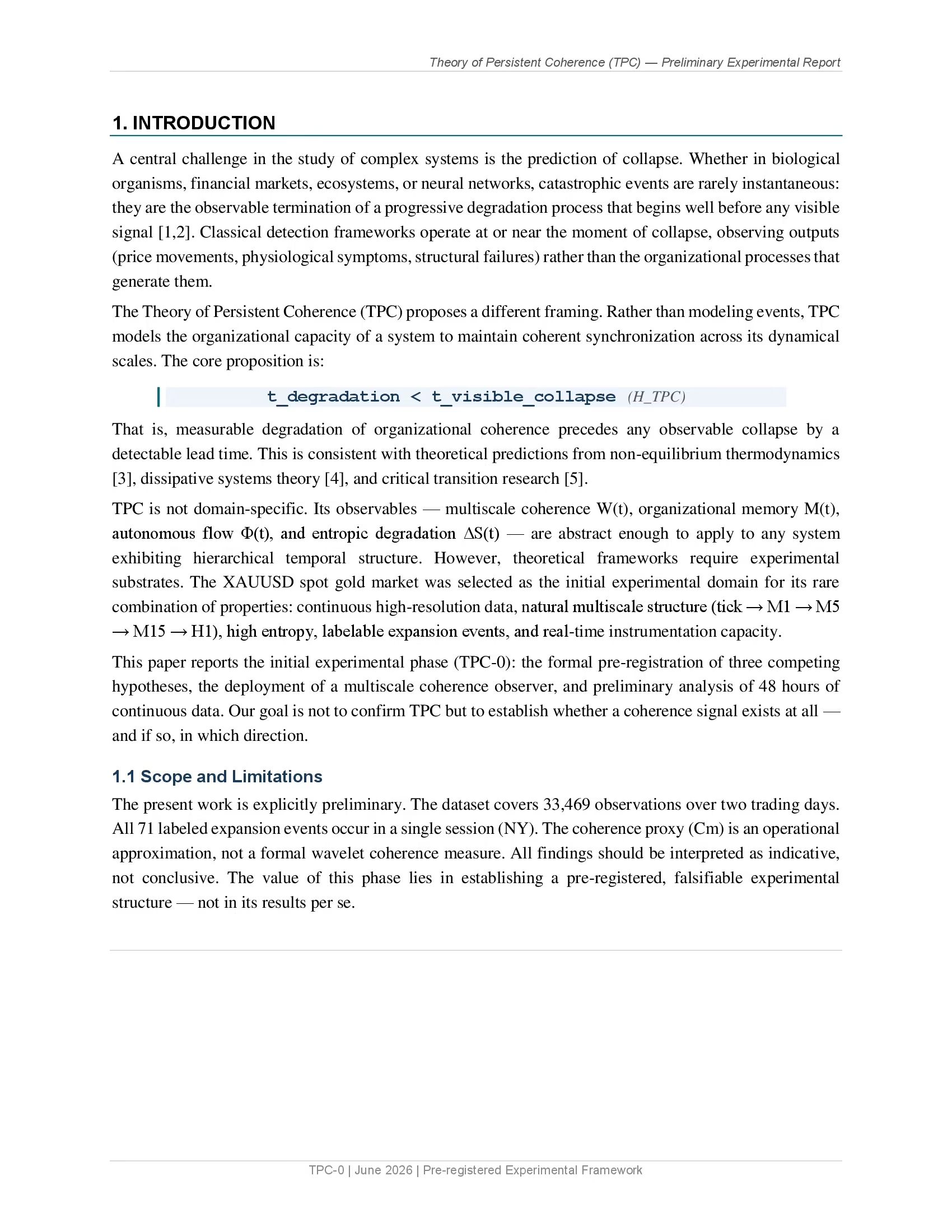
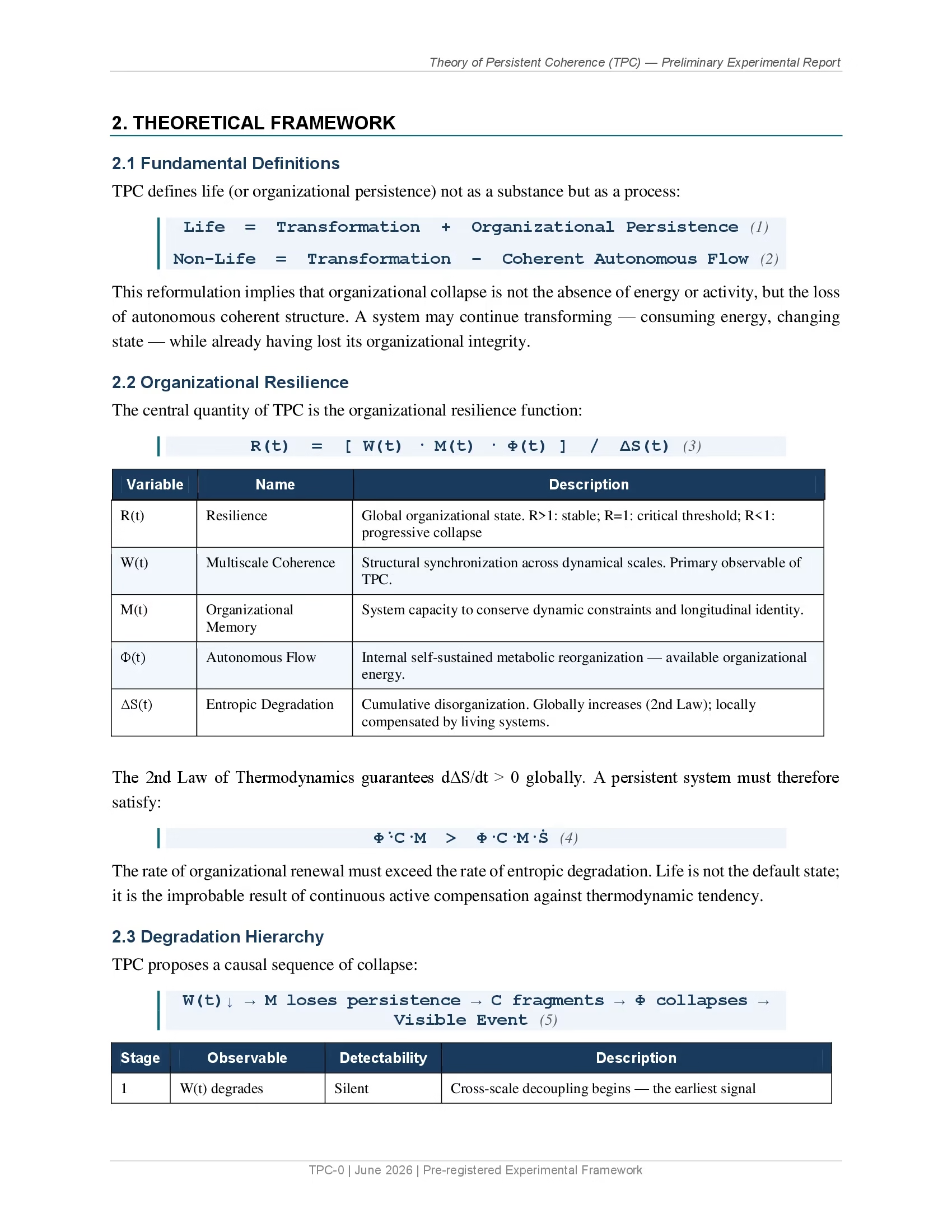
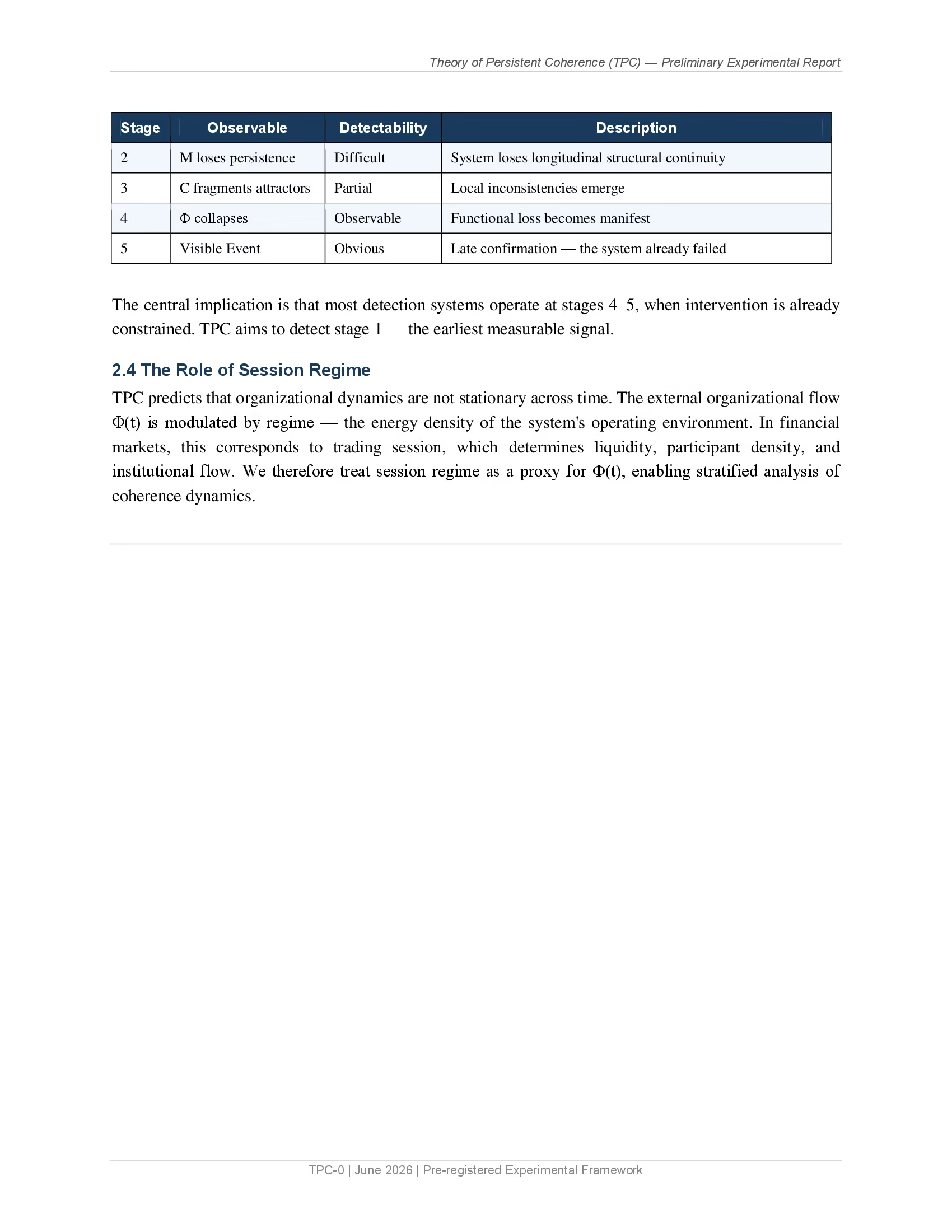
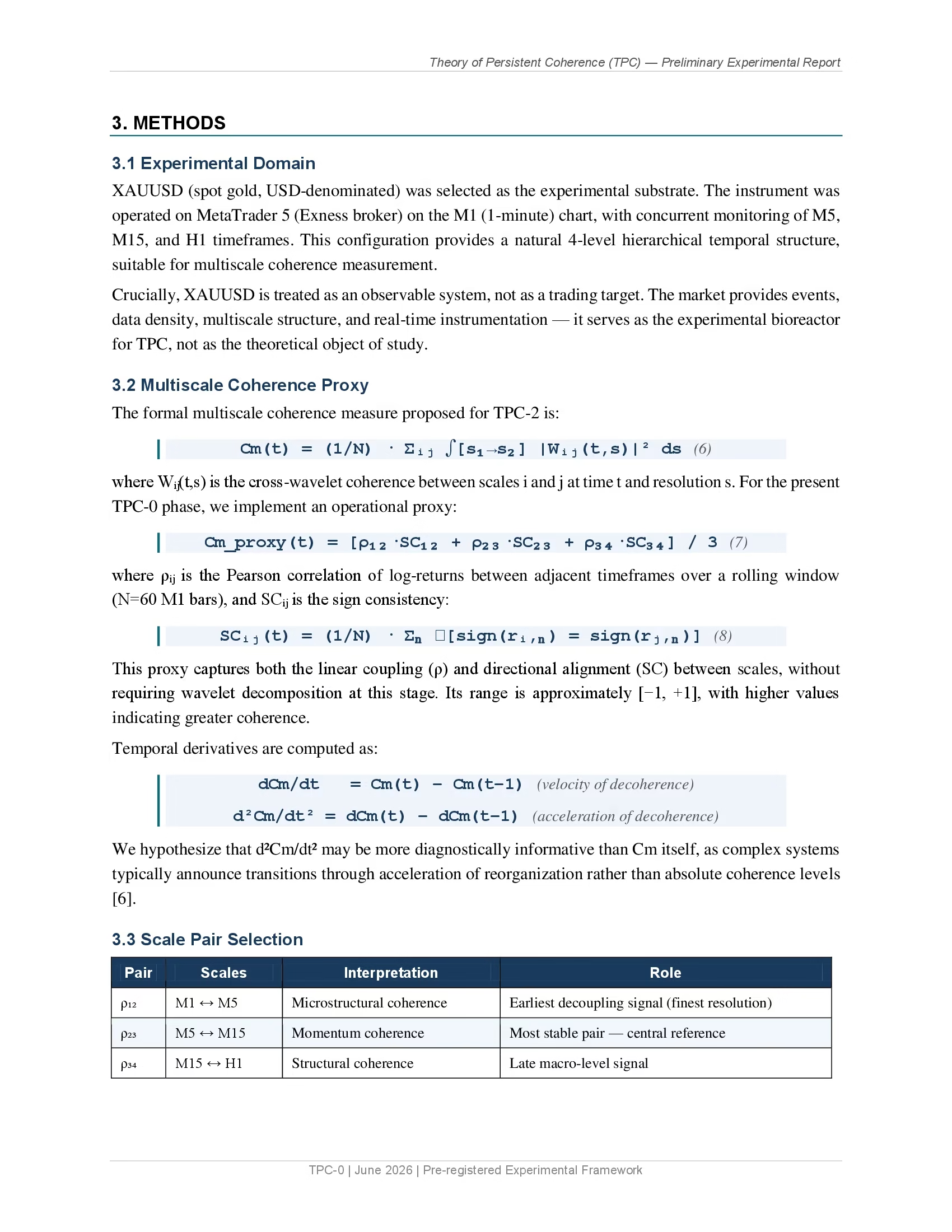
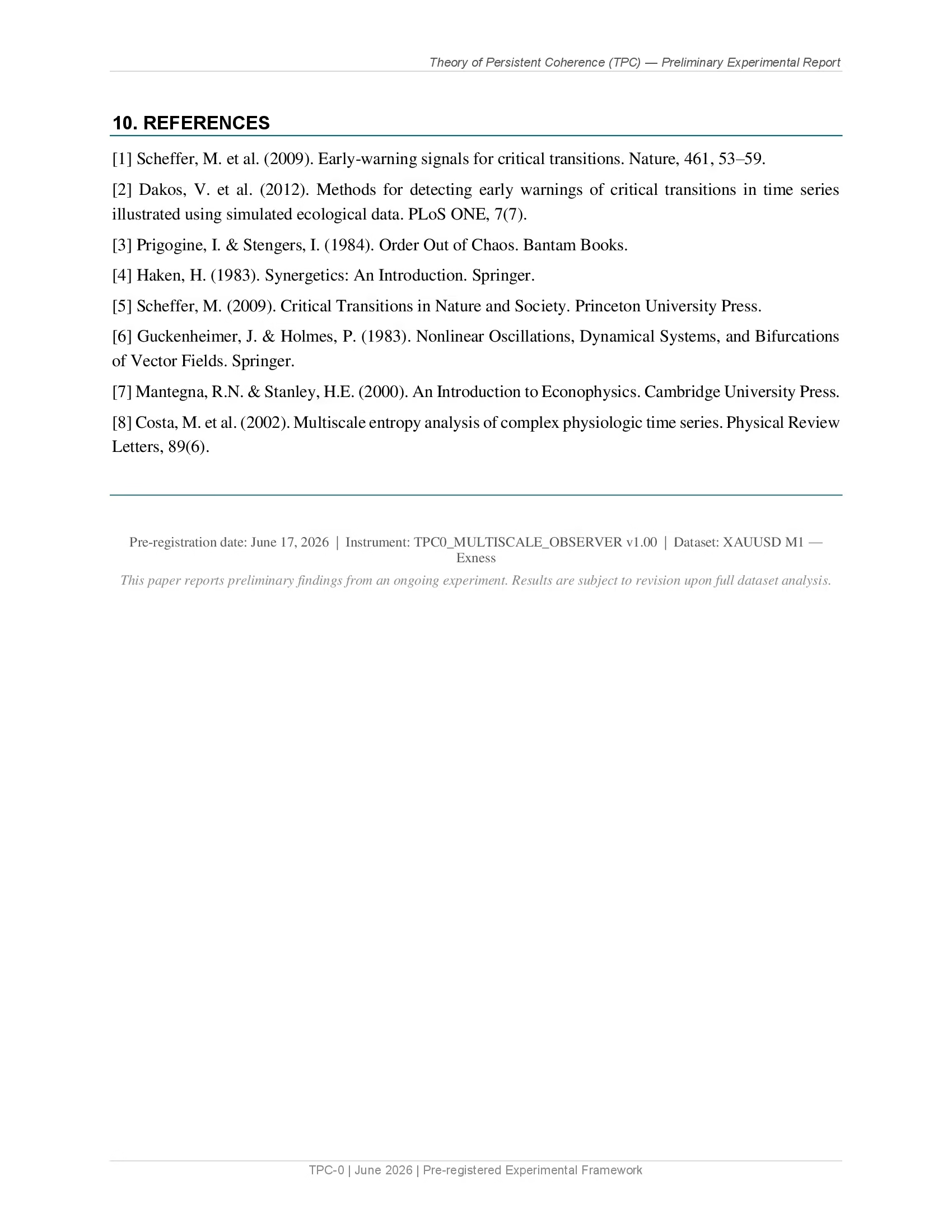
| Section | Content |
|---|---|
| Abstract | Concise summary of the theoretical framework, methodology, preliminary findings, and scope of the study. |
| 1. Introduction | Research problem, central proposition, experimental domain, motivation, and scope of the study. |
| 2. Theoretical Framework | Formal definitions, organizational function R(t), hierarchy of degradation, persistent coherence, and the role of organizational regimes. |
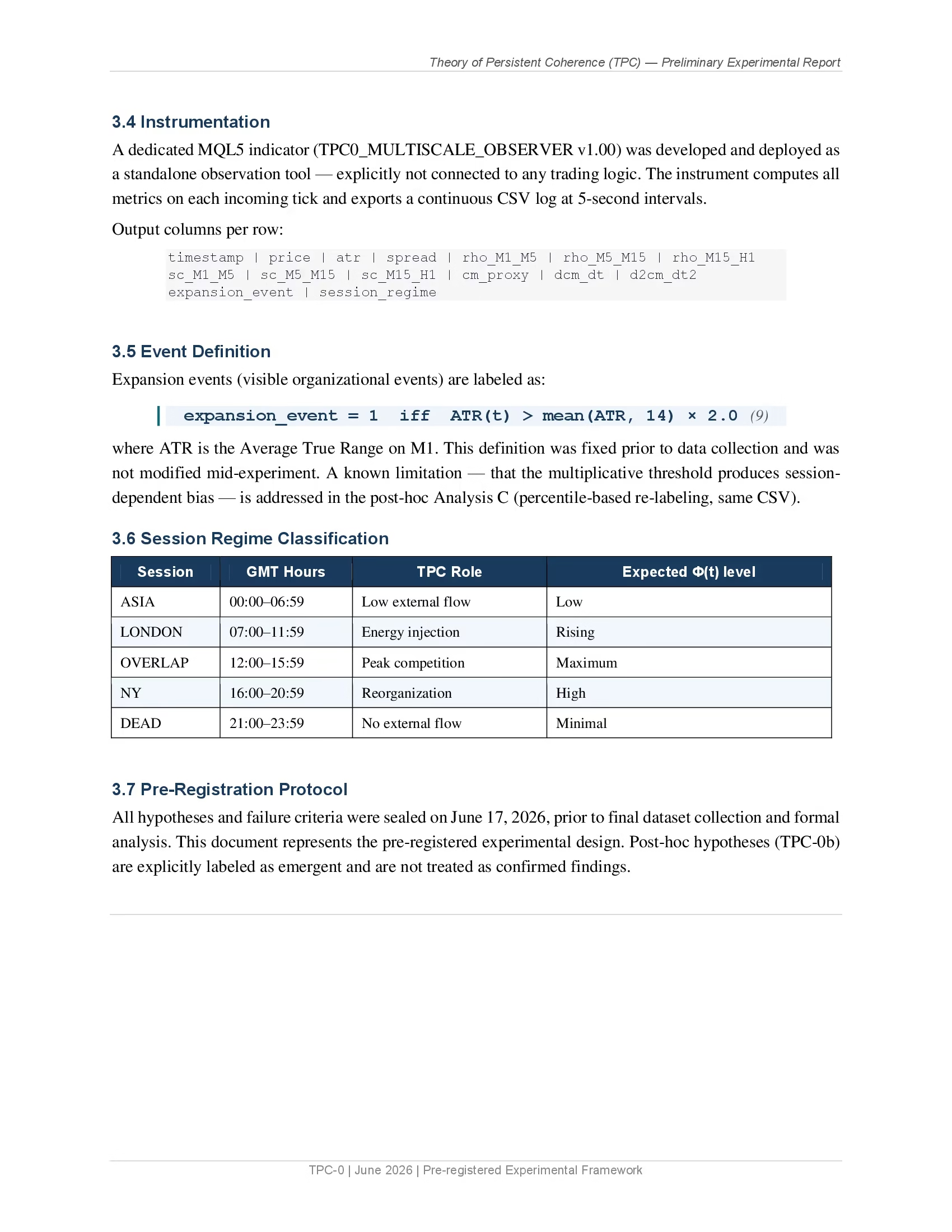
| 3. Methods | Experimental domain, Cm proxy formulation (Equations 6–9), observational instrumentation, event definition, experimental protocol, and preregistration. |
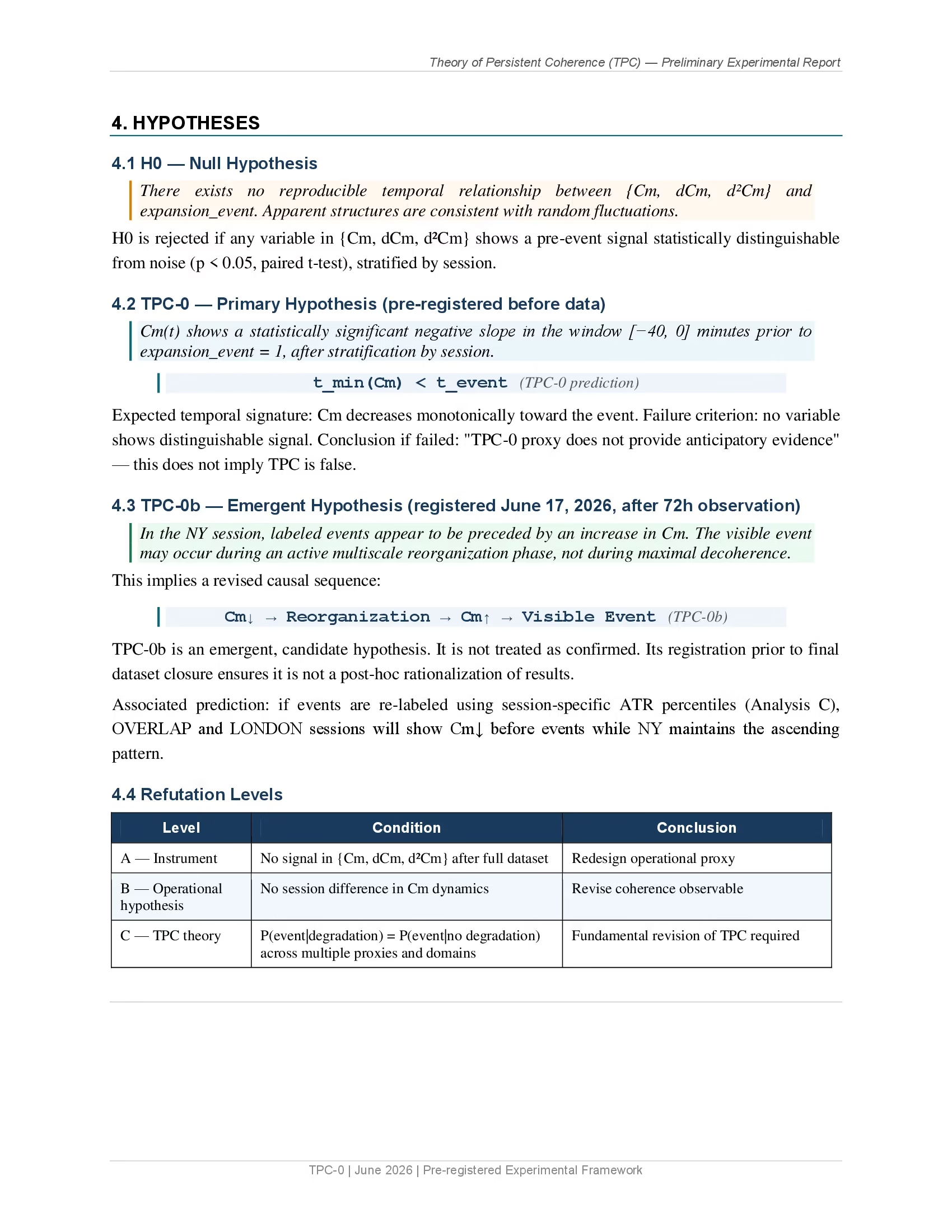
| 4. Hypotheses | Formal statement of H₀, TPC-0, and TPC-0b, including their predicted temporal signatures and falsification criteria. |
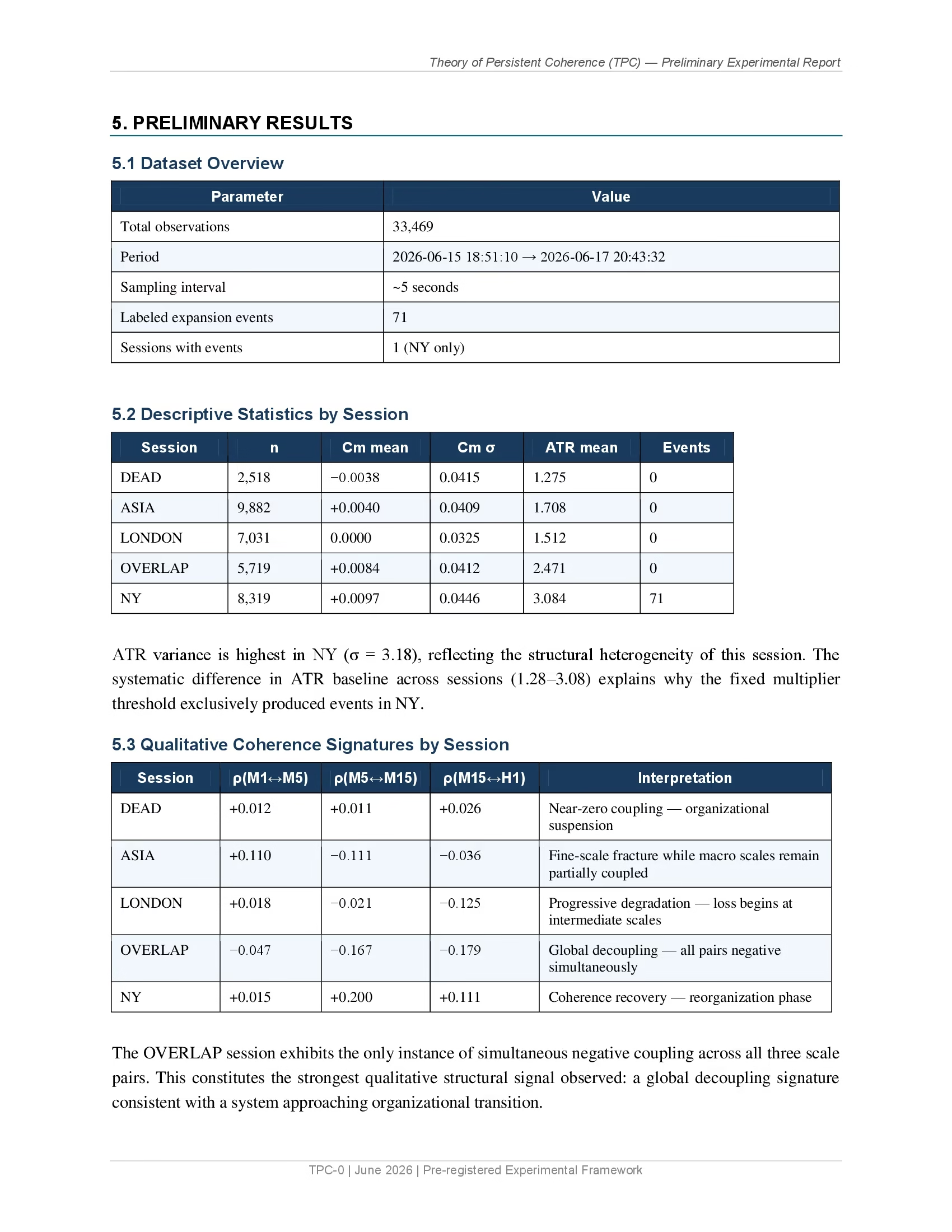
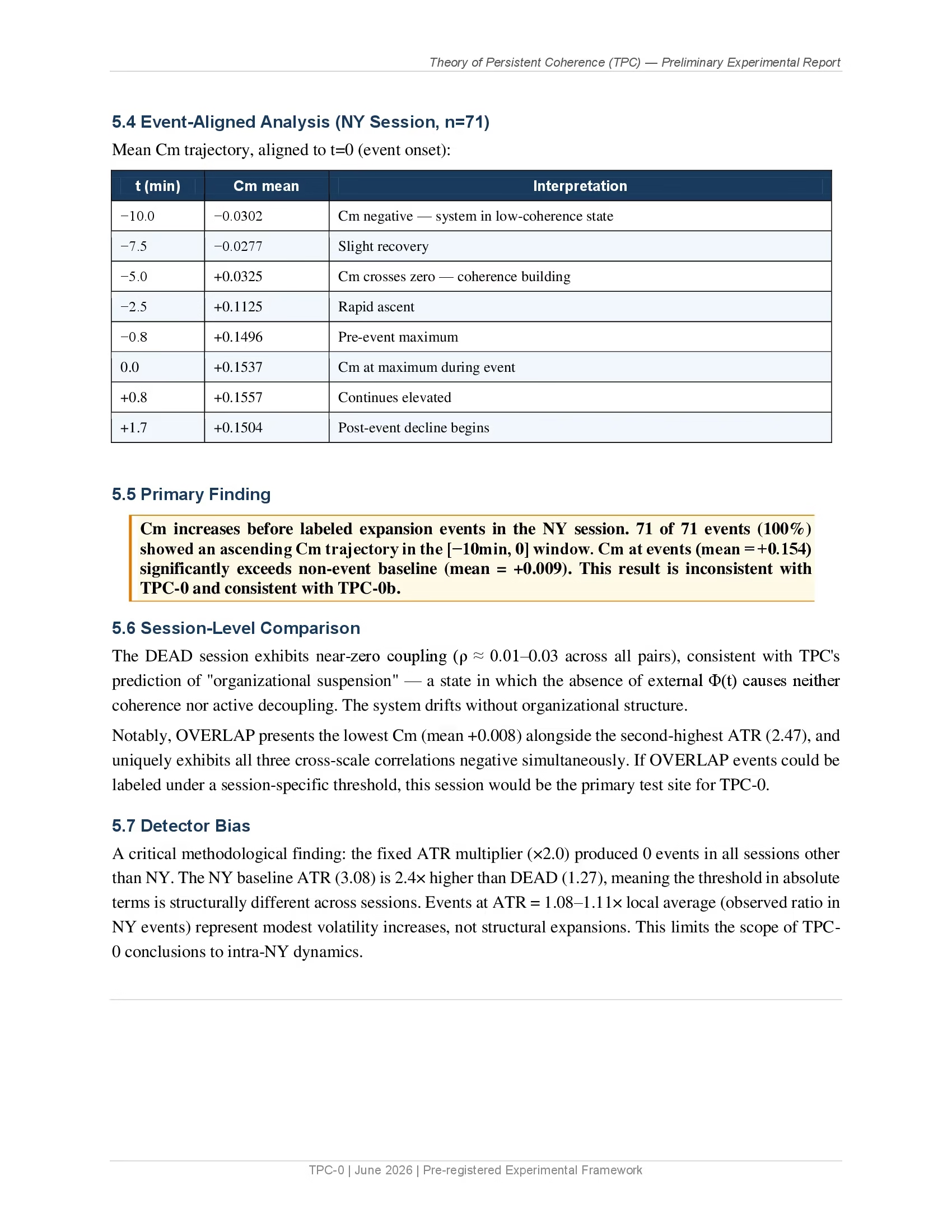
| 5. Results | Dataset description, session-based descriptive statistics, event-aligned analyses, principal findings, and detector bias assessment. |
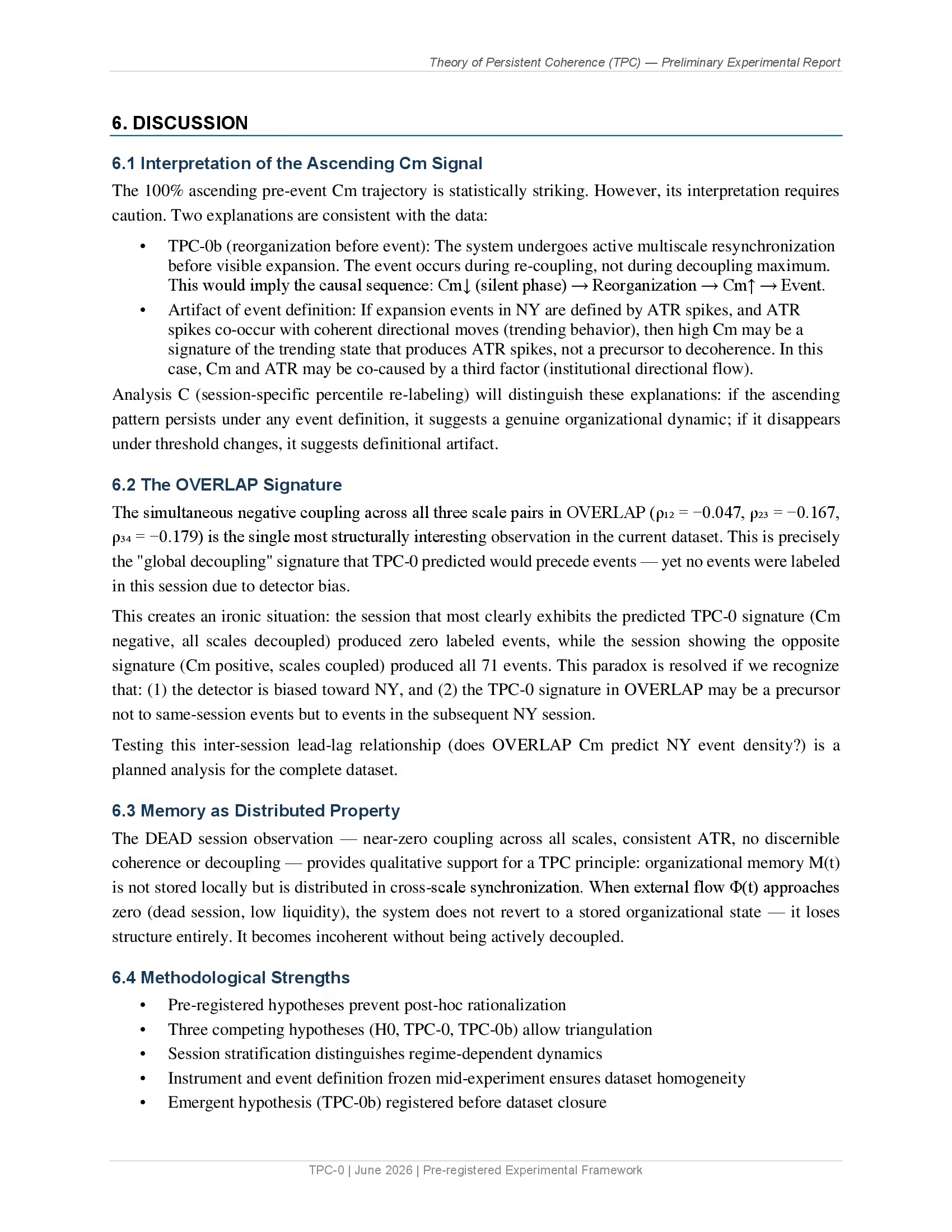
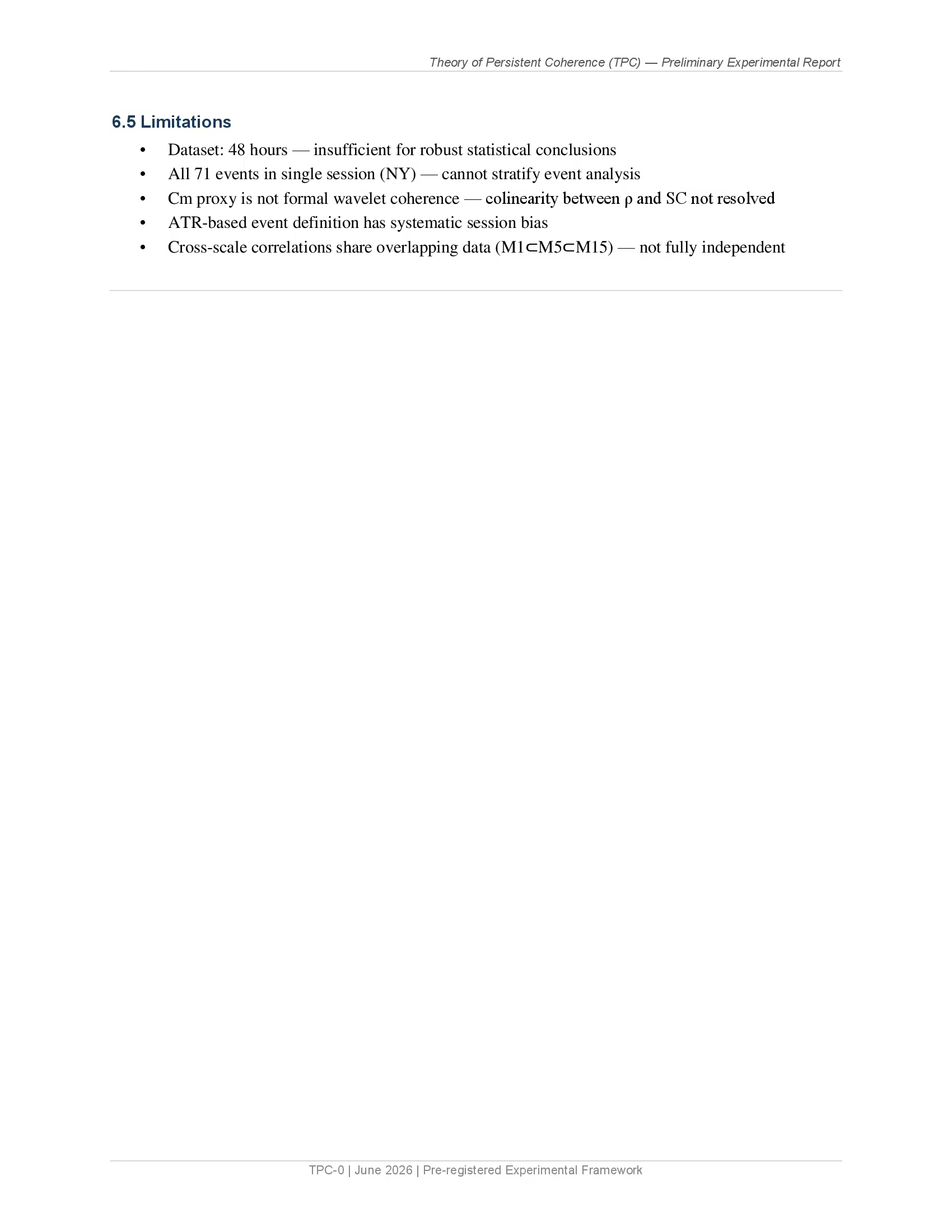
| 6. Discussion | Interpretation of the observed increase in Cm, characteristics of the OVERLAP session, distributed organizational memory, strengths of the framework, and current limitations. |
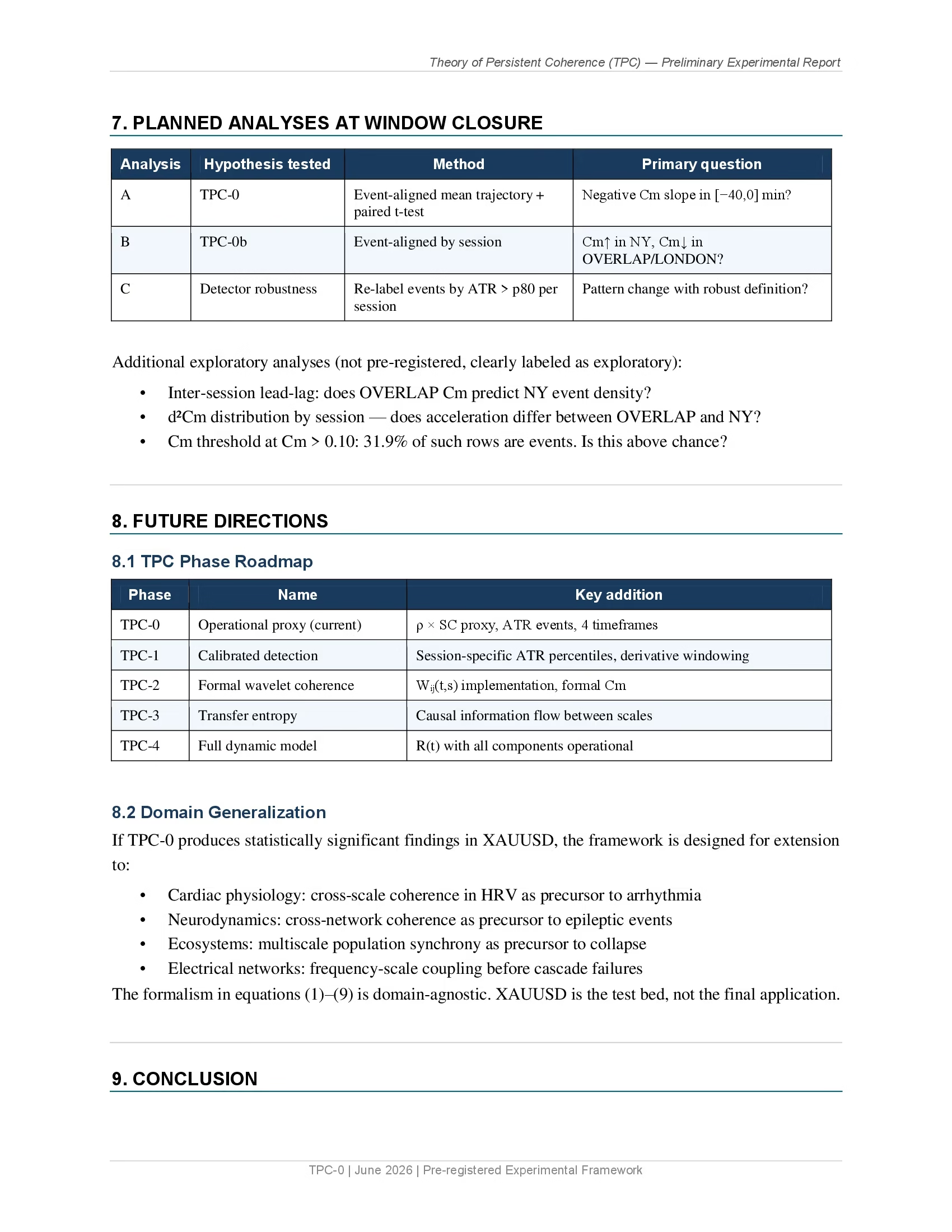
| 7. Planned Analyses | Formal description of the planned analyses (A, B, and C) and their objectives for subsequent validation phases. |
| 8. Future Directions | Research roadmap from TPC-0 through TPC-4, including planned methodological extensions and generalization to other complex-system domains. |
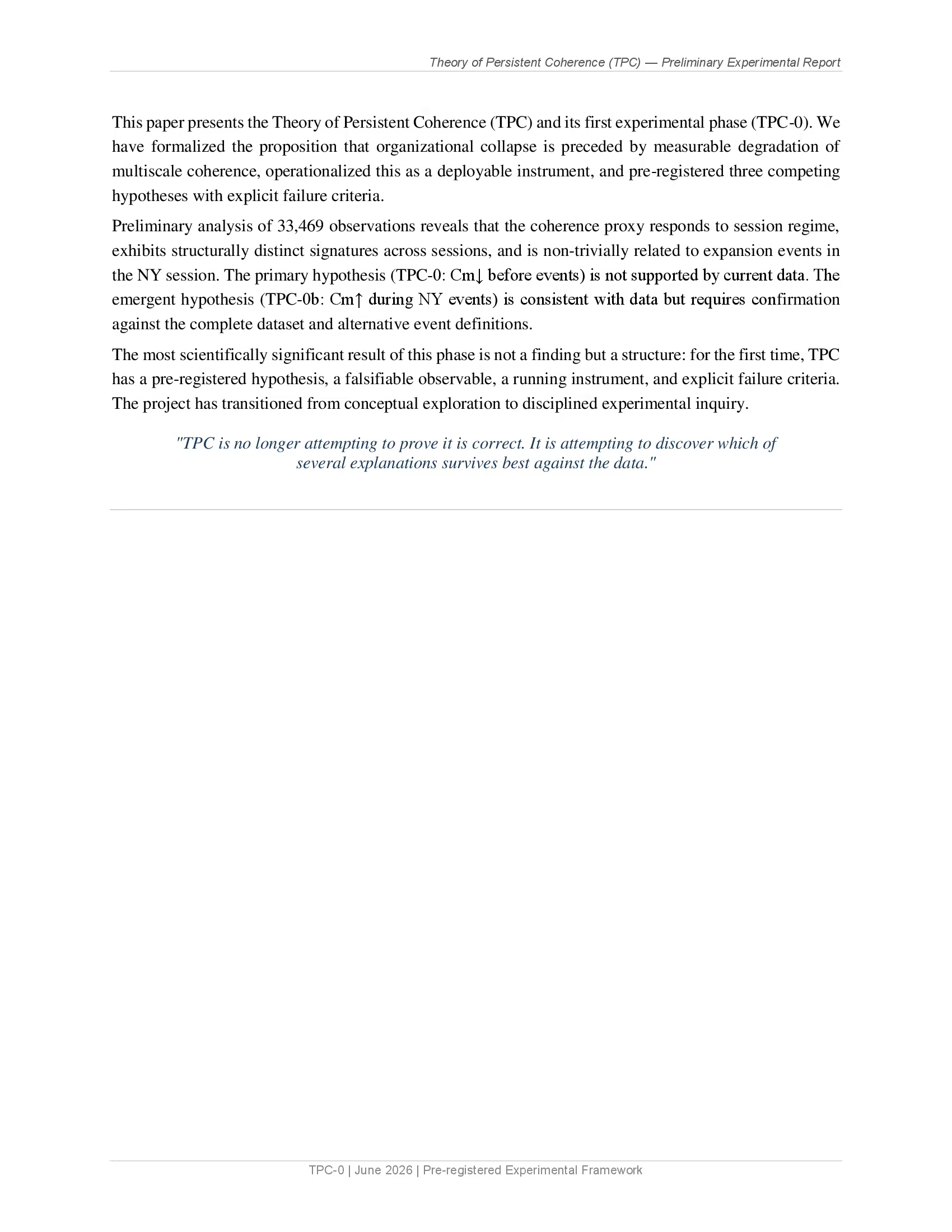
| 9. Conclusion | Summary of the principal findings, current epistemological position, and implications for future research in complex adaptive systems. |
| 10. References | Bibliographic references, including foundational works by Scheffer, Prigogine, Haken, Costa et al., and other relevant literature. |
7.Current Research
The Theory of Persistent Coherence is an active scientific research program. Experimental studies are continuously conducted to evaluate theoretical predictions, refine observational methodologies, and validate the framework through reproducible evidence.
The current research focuses on the first experimental validation of Persistent Coherence using an observational instrument specifically developed to quantify multiscale organizational coherence in dynamic systems.
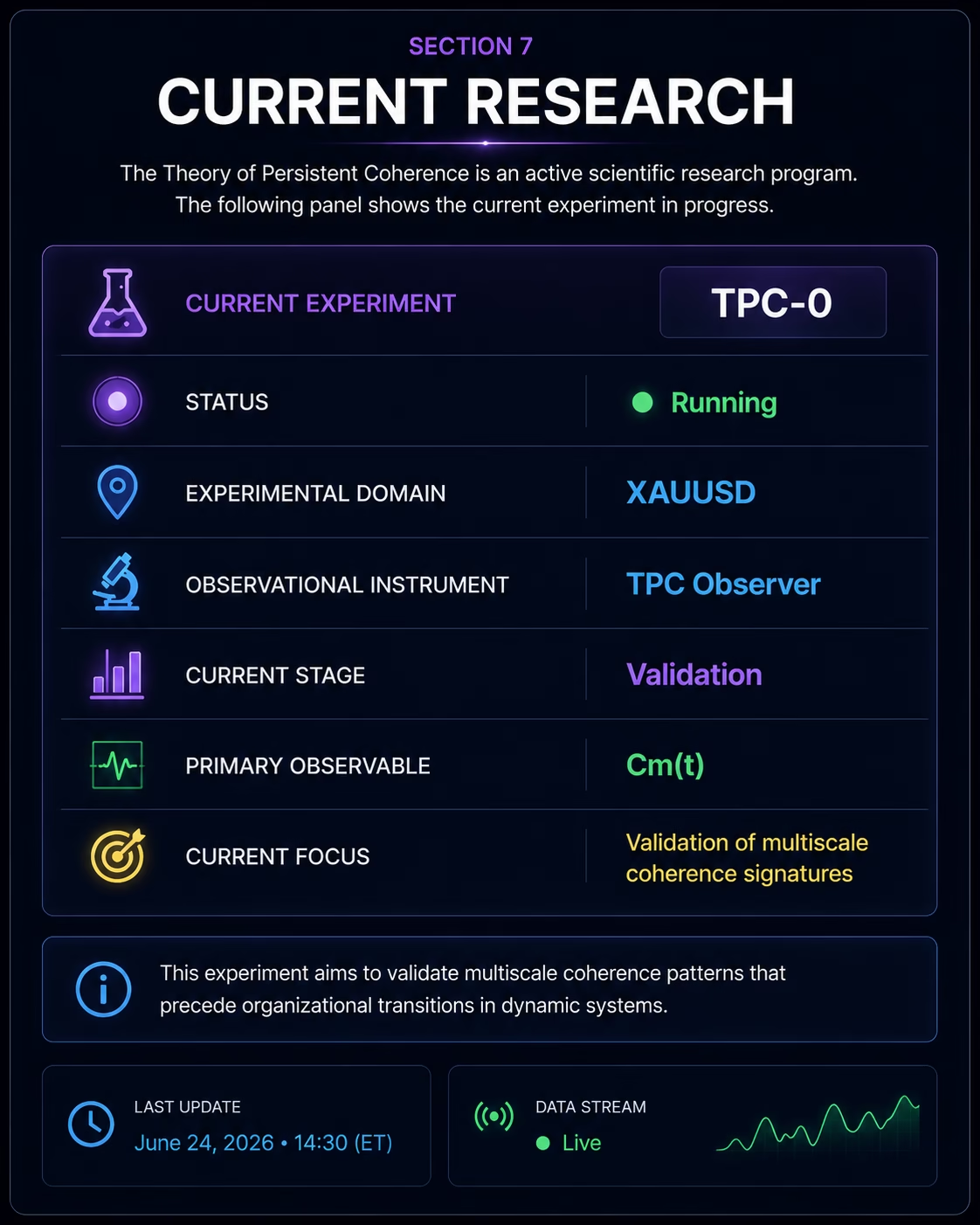
The outcomes of this experiment will contribute to the refinement of the theory and guide the development of subsequent stages of the TPC research program.
8.Research Roadmap
The Theory of Persistent Coherence is conceived as a long-term scientific research program. Each stage builds upon the previous one, progressively expanding the theoretical framework, observational methodologies, and experimental evidence required to establish Persistent Coherence as a rigorous and falsifiable scientific theory.
9.🇺🇸 Potential Applications
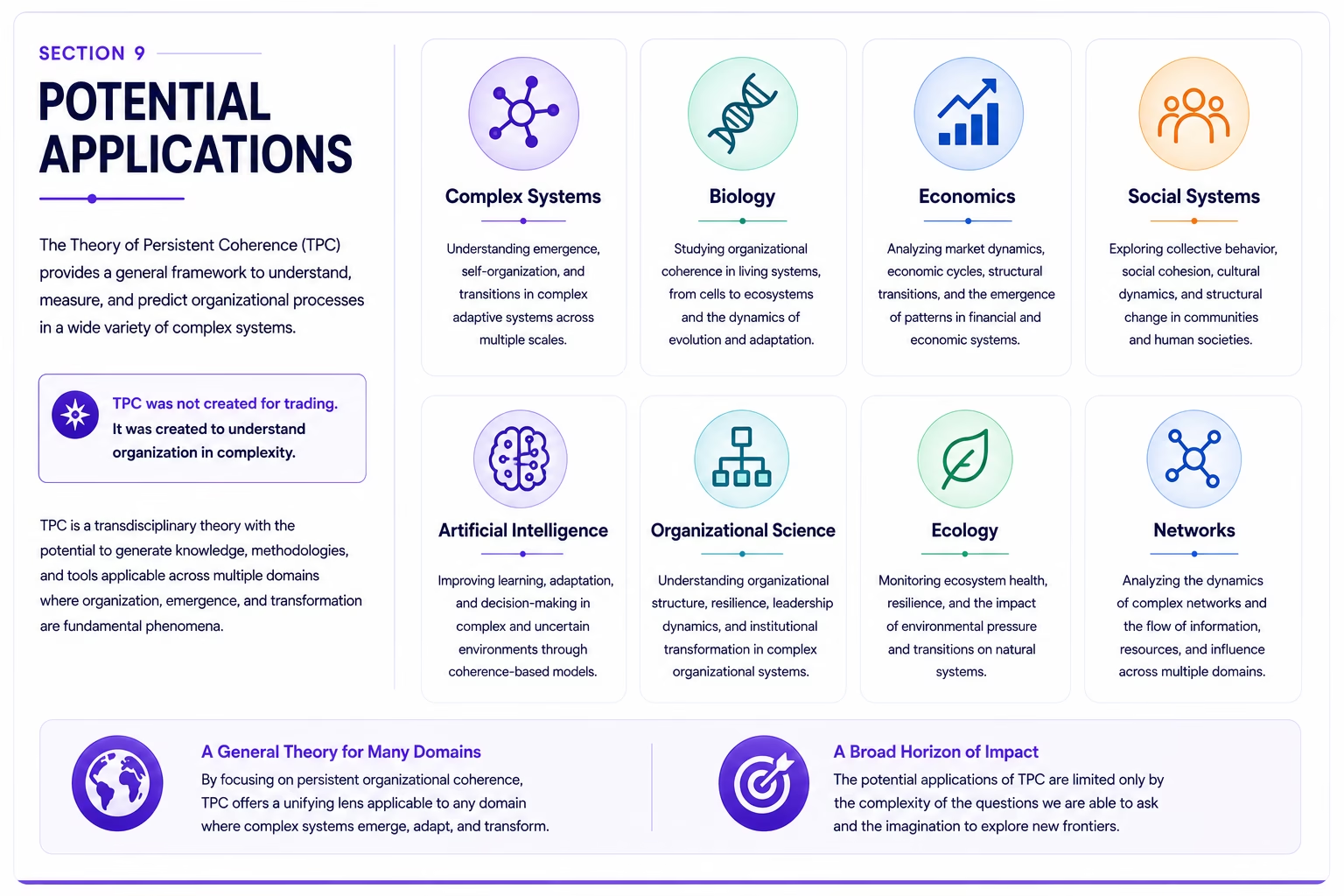
The Theory of Persistent Coherence (TPC) was developed as a general scientific framework for understanding how organization emerges, persists, and transforms in complex adaptive systems. Although its first experimental validation has been conducted within financial markets, the theory is intentionally domain-independent. Its concepts, observables, and methodologies are designed to investigate organizational dynamics wherever complex systems exist.
Persistent Coherence is not restricted to a single discipline. Any system that exhibits emergence, adaptation, multiscale interactions, and organizational change may benefit from the theoretical principles proposed by TPC. As the framework matures, its observational tools and mathematical models are expected to support research across an increasingly diverse range of scientific domains.
Potential Research Domains
Complex Systems
Understanding the emergence, stability, and transformation of complex adaptive systems across multiple organizational scales.
Biology
Studying coordination, adaptation, and organizational coherence in living systems, from cellular processes to ecosystems.
Economics
Analyzing structural transitions, market dynamics, systemic resilience, and large-scale organizational behavior.
Social Systems
Investigating collective behavior, institutional evolution, cultural dynamics, and social organization.
Artificial Intelligence
Developing coherence-based approaches for adaptive learning, autonomous decision-making, and intelligent multi-agent systems.
Organizational Science
Understanding how organizations evolve, maintain resilience, and reorganize under changing internal and external conditions.
Ecology
Exploring ecosystem resilience, adaptation, and large-scale environmental transitions through organizational coherence.
Network Science
Analyzing coordination, synchronization, and information propagation in complex interconnected networks.
TPC was not created for trading. It was created to understand organization in complexity.
The long-term ambition of TPC is to establish Persistent Coherence as a unifying scientific principle for understanding organization, adaptation, and transformation across the sciences.
10.Related Research Programs
The Theory of Persistent Coherence is one component of the broader scientific ecosystem developed within Project Horizon. Together with CORE, QPLAB, and TPF, it contributes to a complementary research framework for understanding the organization, adaptation, and transformation of complex systems.
CORE
Studies the long-term structural organization and evolutionary dynamics of complex systems.
→ Explore CORE
QPLAB
Investigates the internal physiology of complex systems through quantitative observational methodologies.
→ Explore QPLAB
TPF
Develops predictive frameworks for detecting organizational transformation before it becomes externally observable.
→ Explore TPF
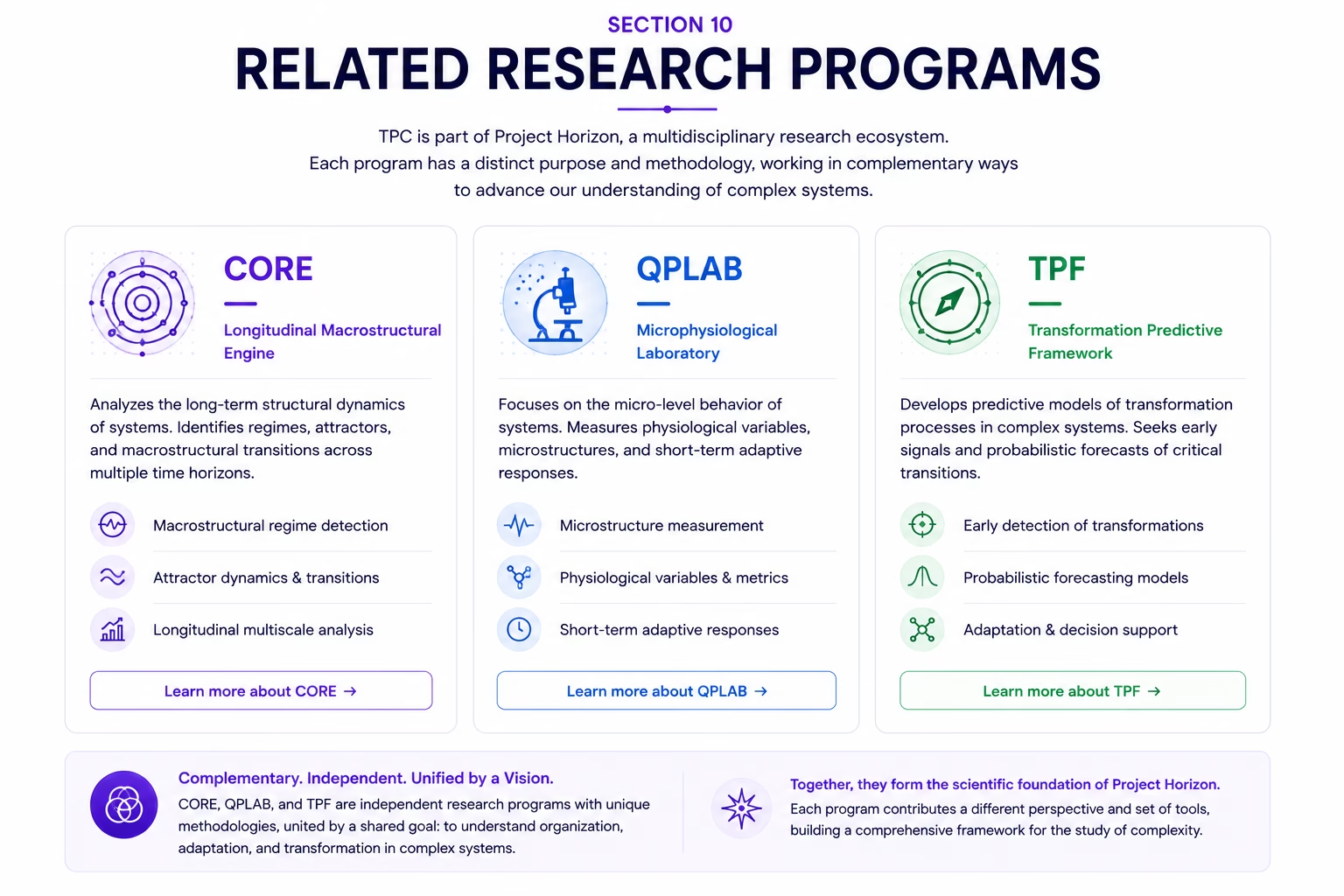
Together, these research programs form the scientific foundation of Project Horizon.
Support Project Horizon
Project Horizon is an independent scientific research initiative developed without institutional funding.
If you believe in the value of open and independent research in complex systems, we invite you to support the continuation of this work.
[ Learn how to support the project ]